

Genetic Testing Requirements for Australian Labradoodle Breeding: A Responsible Breeder’s Guide

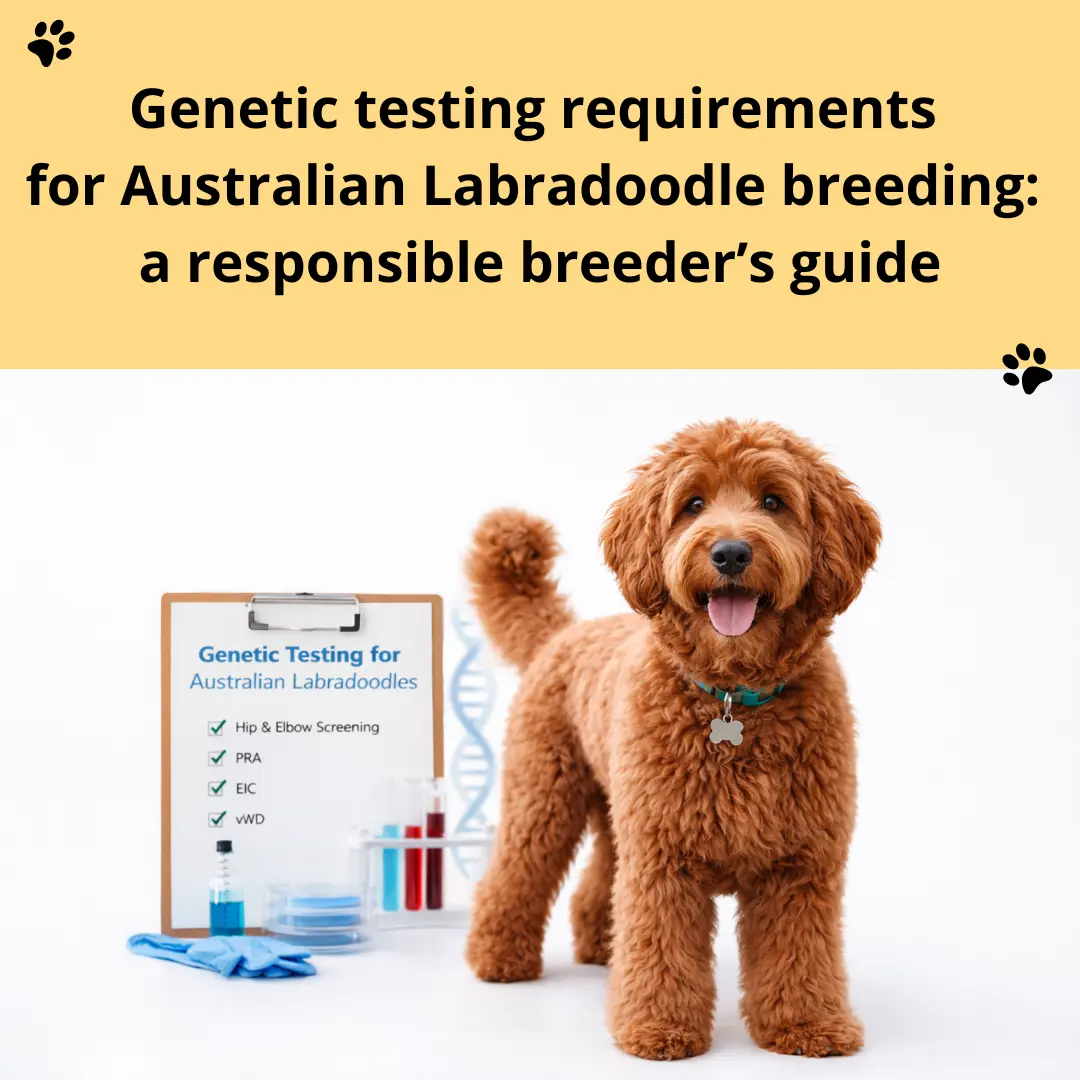
Genetic testing requirements for Australian Labradoodle breeding are essential for producing healthy, stable, and ethically bred dogs. The Australian Labradoodle is a purpose-bred, multi-generational breed, developed through structured breeding programs that prioritize health, temperament, and consistency—principles strongly emphasized by organizations such as the Australian Labradoodle Association of America (ALAA).
Because Australian Labradoodles are developed from Labrador Retrievers, Poodles, and select spaniel lines, responsible breeders rely on comprehensive genetic health testing to reduce inherited disease, preserve genetic diversity, and maintain transparency with puppy buyers.
Understanding genetic testing for Australian Labradoodle breeding is not optional—it is a fundamental responsibility of ethical, ALAA-aligned breeding programs.
Why Genetic Health Testing Matters in Australian Labradoodle Breeding
Australian Labradoodles are valued for their predictable temperament, allergy-friendly coats, and suitability as family and therapy dogs. However, even in well-managed, multi-generational breeding programs, genetic risk is never eliminated entirely.
Without proper health screening, inherited conditions from foundation breeds can still surface and be passed to future generations.
Genetic health testing allows Australian Labradoodle breeders to:
- Identify carriers of inherited diseases
- Avoid high-risk breeding combinations
- Improve long-term population health
- Provide clear, documented proof of responsible breeding practices
Meeting modern genetic testing requirements for Australian Labradoodle breeding protects both the dogs and the breeder’s reputation while aligning with ALAA’s emphasis on accountability and long-term breed stewardship.
ALAA Health Testing Standards for Australian Labradoodles
The Australian Labradoodle Association of America (ALAA) promotes comprehensive health testing as a cornerstone of ethical breeding. ALAA-aligned breeders are expected to complete both DNA-based genetic screening and phenotype-based health evaluations before breeding.
Rather than relying on minimal testing, ALAA philosophy supports informed breeding decisions that protect the breed as a whole while maintaining genetic diversity across generations.
Core Genetic Testing Requirements for Australian Labradoodle Breeding
Because Australian Labradoodles originate from multiple breeds, health testing must address conditions associated with Labrador Retrievers, Poodles, and Spaniel ancestry. The following tests are widely recognized as essential within responsible, ALAA-aligned breeding programs.
Hip and Elbow Dysplasia Screening
Although not DNA-based, hip and elbow evaluations (OFA or PennHIP) are considered foundational health testing expectations for Australian Labradoodle breeding.
Orthopedic disease can significantly impact mobility and quality of life. Breeding dogs should have documented passing evaluations prior to inclusion in a breeding program.
Progressive Retinal Atrophy (PRA)
PRA is an inherited eye disease that can lead to progressive vision loss and blindness. Because multiple PRA variants exist across Poodle and Labrador lines, DNA testing for relevant PRA mutations is strongly recommended.
Ethical Australian Labradoodle breeders ensure that:
- Affected dogs are not bred
- Carrier dogs are only bred to genetically clear partners
Exercise-Induced Collapse (EIC)
EIC is most commonly associated with Labrador Retriever ancestry and may cause weakness or collapse after intense physical activity. Genetic screening for EIC is considered a key component of responsible Australian Labradoodle breeding.
Identifying carriers allows breeders to make safe, informed pairing decisions while preserving valuable genetics.
von Willebrand’s Disease (vWD)
vWD is a hereditary bleeding disorder more prevalent in Poodle lines. DNA testing for vWD helps ensure that Australian Labradoodle puppies are not at risk for excessive bleeding during routine procedures or injury.
Degenerative Myelopathy (DM)
DM is a late-onset neurological condition that can lead to progressive paralysis. While not all genetically affected dogs develop clinical signs, screening for DM supports long-term efforts to reduce its prevalence within the breed.
Additional Health Testing Common in ALAA-Aligned Programs
Many ALAA-aligned breeders also incorporate additional evaluations to further support health and structural soundness, including:
- Patellar Luxation screening
- Annual eye exams (CAER)
- Cardiac evaluations when indicated
These tests reflect a proactive approach consistent with ALAA’s emphasis on comprehensive health assessment.
Coat and Color Genetics: Supporting Transparency, Not Priority
Coat type, shedding potential, and color genetics testing are commonly used in Australian Labradoodle breeding to improve predictability and set realistic expectations for puppy buyers.
While not a substitute for health testing, coat genetics testing:
- Helps predict fleece vs. wool coat types
- Identifies improper coat genes
- Supports consistency across generations
Health-focused genetic testing must always remain the primary priority.
Choosing Reputable Genetic Testing Laboratories
Accurate results depend on reputable laboratories that specialize in canine genetic health testing. Responsible Australian Labradoodle breeders typically work with providers that offer:
- Breed-relevant genetic panels
- Clear carrier and affected classifications
- Verifiable documentation
- Recognition within professional breeding communities
Using reliable laboratories supports compliance with genetic testing expectations in ALAA-aligned breeding programs.
Ethical Use of Genetic Test Results
ALAA breeding philosophy does not exclude dogs solely based on carrier status. Instead, ethical breeding decisions are guided by informed pairings, not genetic elimination.
Best practices include:
- Breeding carrier dogs only to clear partners
- Preserving genetic diversity
- Monitoring health outcomes across generations
This balanced approach protects both individual dogs and the future of the Australian Labradoodle breed.
Transparency and Buyer Confidence
Transparency closely aligns with ALAA values. Reputable breeders openly share:
- DNA test results
- Orthopedic certifications
- Eye exam documentation
Clear communication and accessible documentation help buyers make informed decisions and reinforce trust in responsible Australian Labradoodle breeding programs.
Final Thoughts on Genetic Testing Requirements for Australian Labradoodle Breeding
Genetic testing is the foundation of ethical, ALAA-aligned Australian Labradoodle breeding. Comprehensive health screening protects dogs, strengthens breeding programs, and supports the long-term sustainability of this purpose-bred companion dog.
By following established genetic testing expectations—including DNA screening, orthopedic evaluations, and transparent reporting—breeders uphold the highest standards of responsibility and care.
Responsible breeding is not just about producing puppies—it is about protecting generations to come