

Why My Labradoodle Puppy Keeps Biting Me No Matter What I Do

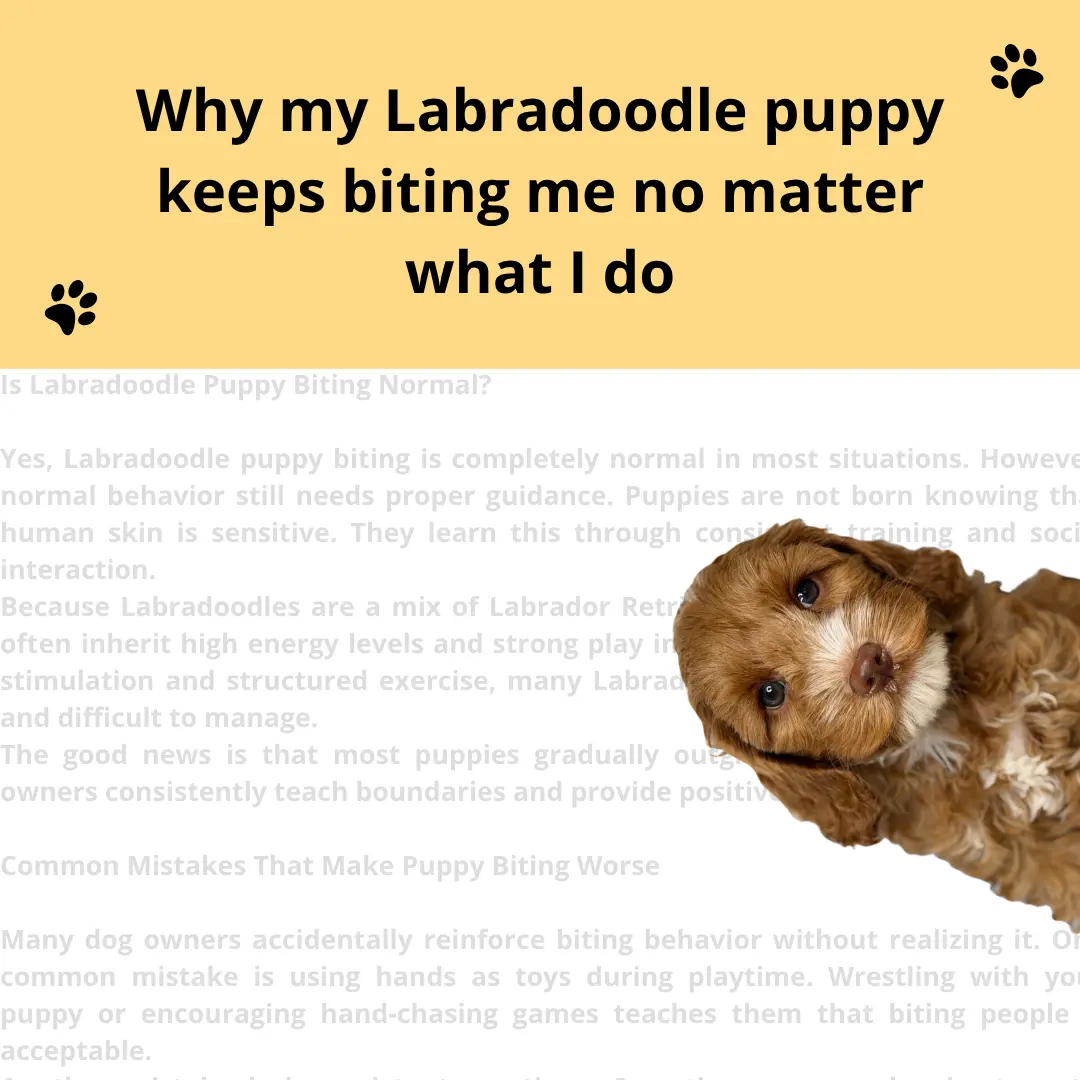
Bringing home a Labradoodle puppy is exciting, but many owners quickly become frustrated when their playful companion starts biting constantly. If you are wondering, “Why does my Labradoodle puppy keep biting me no matter what I do?” you are not alone. Labradoodle puppy biting is one of the most common behavioral challenges during the first year of life. While puppy nipping can feel aggressive or endless, it is usually a normal part of development. Understanding the reasons behind the behavior and using the right puppy training techniques can make a huge difference.
Why Labradoodle Puppies Bite So Much
Labradoodle puppies explore the world with their mouths. Just like human babies grab objects with their hands, puppies use their teeth to investigate textures, people, toys, and surroundings. Puppy biting is especially common between 8 weeks and 6 months of age.
Another reason for excessive puppy biting is teething. During this stage, your Labradoodle experiences discomfort as adult teeth replace baby teeth. Chewing and nipping help relieve gum pain. This is why many Labradoodle owners notice increased biting during the teething phase.
Excitement also plays a major role. Labradoodles are energetic, intelligent, and highly social dogs. When overstimulated, tired, or overly excited, they may start nipping hands, ankles, or clothing. In many cases, the puppy is not trying to hurt you — they simply have not learned proper bite inhibition yet.
Is Labradoodle Puppy Biting Normal?
Yes, Labradoodle puppy biting is completely normal in most situations. However, normal behavior still needs proper guidance. Puppies are not born knowing that human skin is sensitive. They learn this through consistent training and social interaction.
Because Labradoodles are a mix of Labrador Retriever and Poodle genetics, they often inherit high energy levels and strong play instincts. Without enough mental stimulation and structured exercise, many Labradoodle puppies become mouthy and difficult to manage.
The good news is that most puppies gradually outgrow excessive biting when owners consistently teach boundaries and provide positive reinforcement training.
Common Mistakes That Make Puppy Biting Worse
Many dog owners accidentally reinforce biting behavior without realizing it. One common mistake is using hands as toys during playtime. Wrestling with your puppy or encouraging hand-chasing games teaches them that biting people is acceptable.
Another mistake is inconsistent reactions. Sometimes owners laugh at gentle puppy nipping but later punish harder bites. This inconsistency confuses the puppy and slows training progress.
Yelling can also increase biting behavior. Some Labradoodle puppies interpret loud reactions as excitement and become even more stimulated. Physical punishment should always be avoided because it can create fear, anxiety, and trust issues.
Finally, insufficient exercise is a major contributor to puppy biting problems. Labradoodles require both physical activity and mental enrichment. A bored puppy often turns biting into entertainment.
How to Stop Labradoodle Puppy Biting
Redirect the Biting
One of the most effective Labradoodle training tips is redirecting unwanted biting toward appropriate chew toys. Every time your puppy bites your hands or clothes, calmly offer a toy instead. Over time, your puppy learns what is acceptable to chew.
Keep a variety of puppy-safe chew toys nearby throughout the house. Different textures can help soothe teething discomfort and reduce destructive chewing behavior.
Teach Bite Inhibition
Bite inhibition training teaches your Labradoodle to control the pressure of their mouth. When your puppy bites too hard, immediately stop interaction. You can calmly say “ouch” and walk away for a few seconds. This teaches the puppy that rough play ends fun activities.
Consistency is critical here. Everyone in the household should follow the same rules so the puppy receives clear communication.
Use Positive Reinforcement
Positive reinforcement is one of the best methods for stopping puppy biting. Reward calm behavior with praise, treats, or affection. When your Labradoodle chooses a toy instead of your hand, immediately reward that decision.
Dogs repeat behaviors that bring positive outcomes. By consistently rewarding gentle behavior, you encourage your puppy to make better choices naturally.
Provide Enough Exercise and Mental Stimulation
A tired puppy is usually a better-behaved puppy. Labradoodles are intelligent and active dogs that need daily physical and mental challenges. Without enough stimulation, excessive biting and hyperactivity often increase.
Short walks, obedience training sessions, puzzle toys, and interactive games can help burn energy productively. Mental stimulation is especially important for this highly intelligent breed mix.
Watch for Overstimulation
Sometimes biting happens because your puppy is overtired rather than energetic. Puppies need a surprising amount of sleep each day. When they become overstimulated, they may lose self-control and start nipping excessively.
If your Labradoodle suddenly becomes wild, zooms around the house, or bites more intensely, they may need a nap instead of more playtime.
When Labradoodle Puppy Biting Becomes a Problem
Although most puppy biting is normal, certain behaviors may require professional guidance. If your Labradoodle shows signs of true aggression — such as growling over food, stiff body posture, snapping without warning, or biting hard enough to break skin frequently — you should contact a certified dog trainer or veterinarian.
Early intervention is important because behavioral problems are easier to correct during puppyhood. A professional trainer can evaluate whether the behavior is typical puppy mouthing or something more serious.
How Long Does Puppy Biting Last?
Most Labradoodle puppies improve significantly between 4 and 7 months of age as teething ends and training progresses. However, some energetic dogs may continue occasional mouthing during adolescence.
Patience is essential. Puppy training takes time, repetition, and consistency. Owners who stay calm and continue reinforcing positive behavior usually see steady improvement over several months.
Remember that your Labradoodle is still learning how to interact with the world. With proper guidance, socialization, and structured training, your puppy can grow into a gentle and well-mannered companion.
Final Thoughts
If your Labradoodle puppy keeps biting you no matter what you do, it does not mean you are failing as a dog owner. Puppy biting is a normal developmental phase, especially in energetic breeds like Labradoodles. The key is using consistent puppy training methods, redirecting chewing behavior, and rewarding calm interactions.
By focusing on positive reinforcement, mental stimulation, bite inhibition, and proper exercise, you can gradually reduce unwanted puppy nipping. Most importantly, stay patient. Your Labradoodle puppy is still learning, and with time, consistency, and guidance, the biting phase will eventually pass.