

Why Won’t My Labradoodle Listen Anymore? (Even After Training)

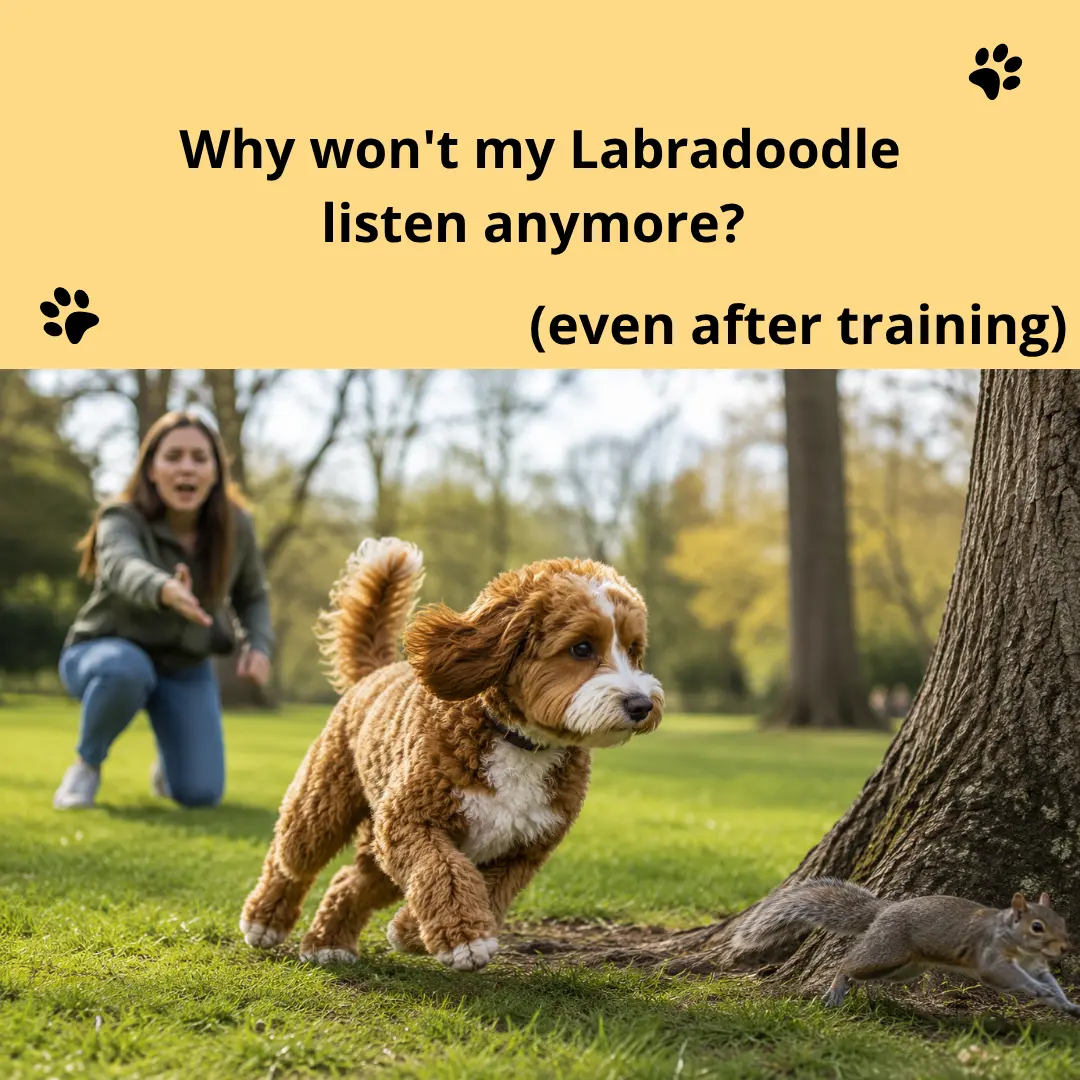
Many owners find themselves searching for answers to the question, “why my Labradoodle won’t listen anymore,”after noticing that a previously obedient dog has started ignoring commands. Whether your Labradoodle is not listening to commands at home, becoming easily distracted during walks, or showing signs of selective hearing, there is usually an underlying reason. Even after successful Labradoodle training, changes in behavior can occur due to age, environment, health issues, or inconsistent reinforcement. Understanding the cause is the first step toward rebuilding good habits and improving your dog’s obedience.
Labradoodles are intelligent, energetic, and highly social dogs. While these qualities make them excellent companions, they can also contribute to Labradoodle behavior problems when their physical and mental needs are not fully met. The good news is that most listening issues can be identified and corrected with patience, consistency, and the right training approach.
Why Your Labradoodle Won’t Listen Despite Previous Training
One of the most common reasons a dog stops responding is that training has not been reinforced consistently over time. Many owners invest heavily in Labradoodle obedience training during puppyhood but gradually stop practicing commands once their dog appears well-behaved.
Dogs require lifelong reinforcement. Commands such as “sit,” “stay,” and “come” must continue to be practiced regularly. Without repetition, even a well-trained dog may begin to respond less reliably. This often leads owners to believe their dog has forgotten its training when, in reality, the behavior simply hasn’t been maintained.
Short refresher sessions a few times a week can help strengthen Labradoodle obedience and keep commands sharp.
Adolescent Labradoodles Often Test Boundaries
If your Labradoodle is between six months and two years old, adolescence may be the culprit. During this developmental stage, many dogs begin testing limits and becoming more independent.
Owners frequently report that their Labradoodle suddenly ignores commands it previously followed without hesitation. While this can be frustrating, it does not mean the training has failed. Your dog still understands the commands but may be experimenting with decision-making and self-control.
Consistency is especially important during adolescence. Avoid repeating commands excessively and continue rewarding the behaviors you want to see. Most dogs become more reliable as they mature.
How Boredom Causes Labradoodle Behavior Problems
Labradoodles inherit intelligence and energy from both the Labrador Retriever and the Poodle. As a result, they require substantial physical exercise and mental stimulation every day.
A bored dog often creates its own entertainment. This can lead to common Labradoodle behavior problems, including excessive barking, chewing, digging, jumping, and ignoring commands.
If your trained Labradoodle is not obeying as well as before, consider whether their daily routine provides enough engagement. Long walks, puzzle feeders, scent games, obedience exercises, and interactive play sessions can significantly improve focus and responsiveness.
A mentally fulfilled Labradoodle is much more likely to pay attention when you ask for a command.
Inconsistent Household Rules Can Cause Confusion
Another common reason owners ask, “Why my Labradoodle won’t listen?”, is inconsistency within the home.
For example, if one family member allows the dog on the couch while another discourages it, the dog receives mixed messages. The same confusion can occur with jumping on guests, leash manners, begging at the table, or recall commands.
Successful Labradoodle training relies on clear and consistent expectations. Everyone in the household should use the same commands and enforce the same rules whenever possible.
When expectations remain consistent, dogs learn faster and respond more reliably.
Distractions May Be More Rewarding Than Your Commands
Many owners assume their dog is being stubborn when it ignores them outdoors. In reality, the environment may simply be more exciting than the reward being offered.
Squirrels, other dogs, unfamiliar smells, and busy surroundings can easily compete for your Labradoodle’s attention. This is particularly common in dogs experiencing Labradoodle recall problems during walks or visits to the park.
Improving reliability requires gradual exposure to distractions. Practice commands in quiet environments first, then slowly increase the level of difficulty. Over time, your dog learns that responding to you is more rewarding than focusing on outside distractions.
Medical Issues Can Affect Your Dog’s Responsiveness
Sometimes the answer to why my Labradoodle won’t listen anymore has nothing to do with training at all.
Health problems can influence behavior and reduce responsiveness. Conditions such as hearing loss, vision changes, arthritis, thyroid disorders, dental pain, or chronic discomfort may affect your dog’s ability or willingness to follow commands.
If your Labradoodle stopped listening suddenly and the change seems unusual, a veterinary examination is recommended. Identifying an underlying medical issue early can prevent further complications and improve your dog’s quality of life.
Your Rewards May No Longer Be Motivating
Training success depends heavily on motivation. What worked when your Labradoodle was a puppy may not be as effective today.
Some dogs lose interest in certain treats, toys, or forms of praise over time. If the reward no longer feels valuable, your dog may become less enthusiastic about responding.
Consider testing different rewards to determine what motivates your dog most. High-value treats, favorite toys, or a brief game can often improve engagement and strengthen Labradoodle obedience training results.
Signs Your Labradoodle Needs Refresher Training
Sometimes a few warning signs indicate that your dog would benefit from additional training sessions:
- Ignores basic commands at home
- Responds inconsistently to recall cues
- Becomes easily distracted during walks
- Only listens when treats are visible
- Frequently tests household rules
- Appears less focused than before
Addressing these behaviors early can prevent them from becoming long-term habits.
How to Rebuild Reliable Labradoodle Obedience
The good news is that most listening issues can be improved with patience, consistency, and positive reinforcement.
Start by revisiting basic commands in low-distraction environments. Reward desired behaviors immediately and ensure your dog receives adequate exercise and mental stimulation each day. Keep training sessions short, engaging, and enjoyable.
If challenges persist, consider working with a professional trainer who has experience with Labradoodle behavior problems. An expert can identify specific issues and create a personalized plan tailored to your dog’s needs.
Final Thoughts
If you’ve been asking yourself, “Why my Labradoodle won’t listen anymore?”, remember that regression is common and often temporary. Whether the cause is adolescence, boredom, inconsistent training, health concerns, or environmental distractions, most issues can be corrected with a thoughtful approach.
By maintaining consistent Labradoodle training, providing adequate mental stimulation, and reinforcing positive behaviors, you can rebuild trust, improve communication, and restore the reliable Labradoodle obedience that every owner wants to achieve.