

Why Your Labradoodle Brings You Toys but Doesn’t Want to Play

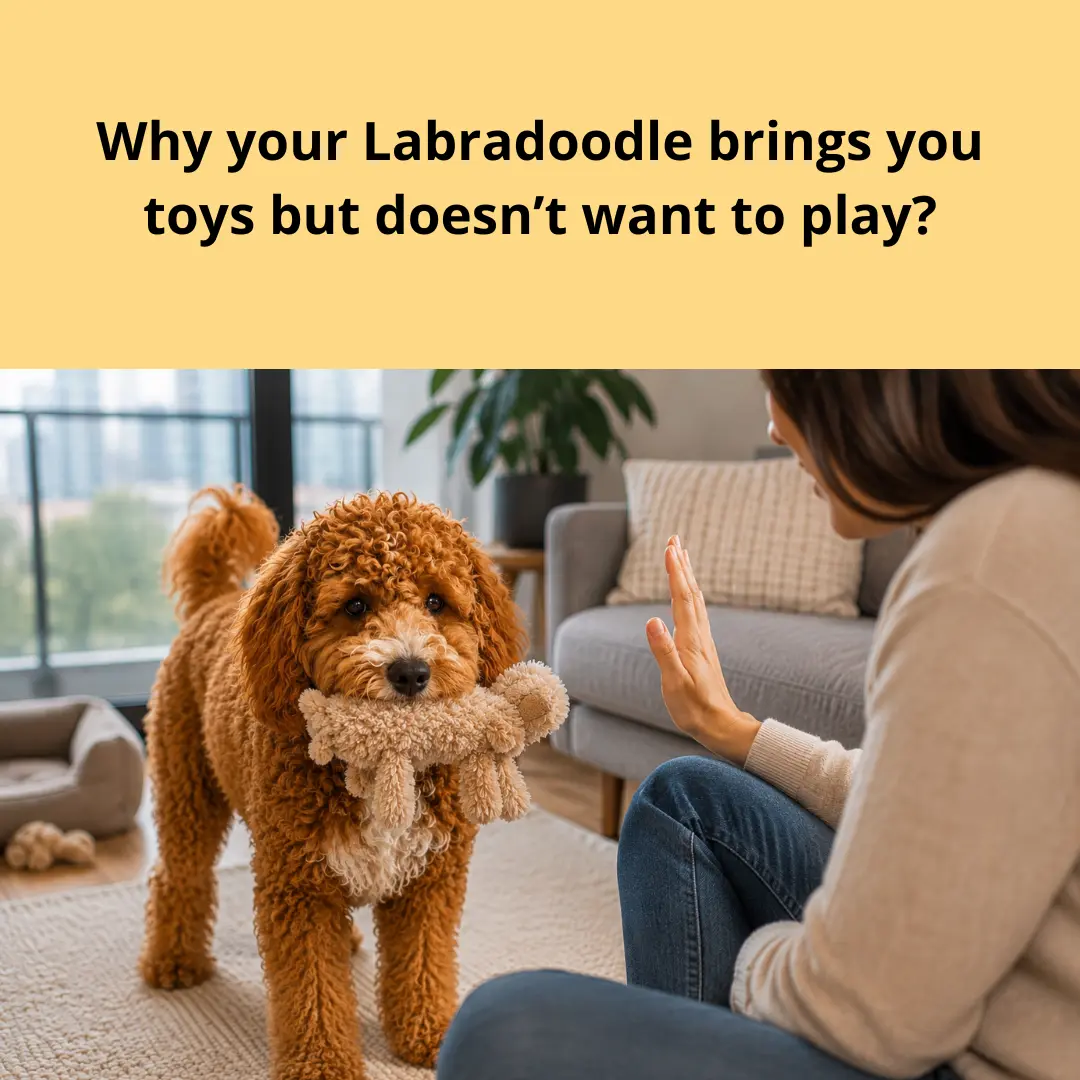
Why Your Labradoodle Brings You Toys but Doesn’t Want to Play
If your Labradoodle brings you a favorite toy, drops it at your feet, and then seems completely uninterested when you try to play, you may wonder what is going on. Why does your dog bring toys but not play with them? For Labradoodle owners, this behavior can be surprisingly common. In many cases, your Labradoodle is not being confusing or stubborn. Bringing you a toy can be a form of communication, affection, attention-seeking, or simply an invitation to interact in a way that does not necessarily involve a game of fetch.
Understanding Labradoodle behavior means looking beyond the obvious action. The meaning behind your dog’s favorite toy may depend on their personality, age, mood, environment, and relationship with you.
Your Labradoodle May Be Asking for Attention
One of the simplest explanations for this behavior is that your Labradoodle wants your attention rather than an actual game.
Australian Labradoodles are known for being social, people-oriented dogs. They often enjoy being close to their families and can develop strong bonds with their owners. Bringing a toy may be your dog’s way of saying, “Look at me,” “Stay with me,” or “Let’s do something together.”
You might notice that your Labradoodle brings a toy when you are working, watching television, or doing something that does not involve them. If you respond by talking, petting them, laughing, or looking at them, your dog quickly learns that bringing a toy is an effective way to get your attention.
In this case, the toy itself may simply be a conversation starter.
Bringing a Toy Doesn’t Always Mean “Let’s Play”
Dogs communicate differently from humans, and we sometimes assume that every toy presentation is an invitation to play.
Your Labradoodle may bring you a toy because they want to show it to you, not because they want you to throw it. Some dogs enjoy carrying their favorite objects around and sharing them with their humans without actually wanting a game.
You may see your dog proudly walk toward you with a stuffed animal, place it nearby, and then lie down. When you pick it up and attempt to initiate fetch, they may simply stare at you.
This is one reason it is important to pay attention to the rest of your dog’s body language. A relaxed body, soft eyes, loose tail, and calm posture suggest that your Labradoodle may simply be enjoying your company.
Your Dog Could Be Looking for Interaction, Not Exercise
There is an important difference between play behavior and social interaction.
For some Labradoodles, bringing a toy is a way to initiate a small social ritual. They may want you to hold the toy, admire it, or briefly touch it. After that interaction, they are perfectly happy to return to their bed.
This can be especially common in dogs that have already had plenty of physical activity. If your Labradoodle has just finished a long walk or training session, they may want companionship without additional exercise.
In other words, your dog may be saying, “I want to spend time with you,” rather than, “I want to play fetch.”
They May Be Showing You Their Favorite Possession
Dogs can become emotionally attached to particular toys. A favorite toy can provide comfort, entertainment, and familiarity.
When your Labradoodle brings a special toy to you, they may simply be sharing something valuable with a trusted person. This behavior can be a sign of a strong bond.
Think about it from your dog’s perspective: this is an object they love, and they are bringing it to the person they trust most.
This is one of the sweetest examples of Labradoodle bonding behavior. Your dog does not necessarily need you to do anything with the toy. Your presence may be enough.
Sometimes Your Labradoodle Wants You to Chase Them
There is another possibility: your dog absolutely does want to play—but not according to your rules.
Some Labradoodles enjoy games such as chasing, tugging, or playful keep-away more than traditional fetch. They may bring you a toy, wait for you to reach for it, and then quickly move away.
If your dog repeats this pattern while wagging their tail, bouncing around, bowing with their front legs down, or running away playfully, they may be inviting you into their own version of a game.
Labradoodles are intelligent dogs, and they often discover creative ways to turn ordinary interactions into games.
Pay Attention to Your Labradoodle’s Body Language
The best way to understand why your Labradoodle brings you toys is to look at the entire situation.
Signs that your dog probably wants to play include:
- A loose, wiggly body
- Play bows
- Bouncing or excited movements
- A wagging tail
- Repeatedly bringing the toy back
- Running toward you and then away
- Excited facial expressions
On the other hand, if your Labradoodle gently places the toy beside you and then settles down, they may simply want to be near you.
If your dog suddenly stops playing with toys they normally love and also seems tired, withdrawn, uncomfortable, or uninterested in other activities, pay closer attention. A significant change in behavior can sometimes indicate stress, discomfort, or an underlying health issue. If the change persists, consulting your veterinarian is the safest approach.
Age and Personality Can Change Toy Behavior
Not every Labradoodle interacts with toys in the same way.
Puppies may bring toys because they are exploring their environment and learning how to interact with people. Young Labradoodles often have intense bursts of energy and may switch between toys, zoomies, training, and cuddling within minutes.
Adult dogs may become more selective. Instead of wanting constant play, they may prefer short interactions throughout the day.
Senior Labradoodles can also change their relationship with toys. They may enjoy carrying, chewing, or cuddling with a toy more than running after it.
Personality matters, too. Some Labradoodles are natural retrievers, while others are more interested in cuddling, exploring, or simply staying close to their favorite person.
How Should You Respond?
The next time your Labradoodle brings you a toy, don’t automatically throw it.
Instead, pause and observe. Talk to your dog, offer gentle affection, or briefly interact with the toy. If they initiate a game, follow their lead. If they settle down, let them enjoy the quiet moment.
The goal is not to teach your dog that bringing a toy always results in a game. It is to understand what your Labradoodle is communicating.
The Sweet Meaning Behind the Behavior
So, why does your Labradoodle bring you toys but not want to play? The answer may be much simpler—and sweeter—than you expect.
Your dog may be asking for attention, sharing a favorite possession, inviting you into a social interaction, or simply reminding you that you are their favorite person.
For a Labradoodle, a toy can be more than something to chase. It can be a way of saying, “I want to be with you.”
And sometimes, that is all they wanted in the first place.