

Why Australian Labradoodle Puppies Behave Like Emotional Mirrors

Understanding Their Behavior
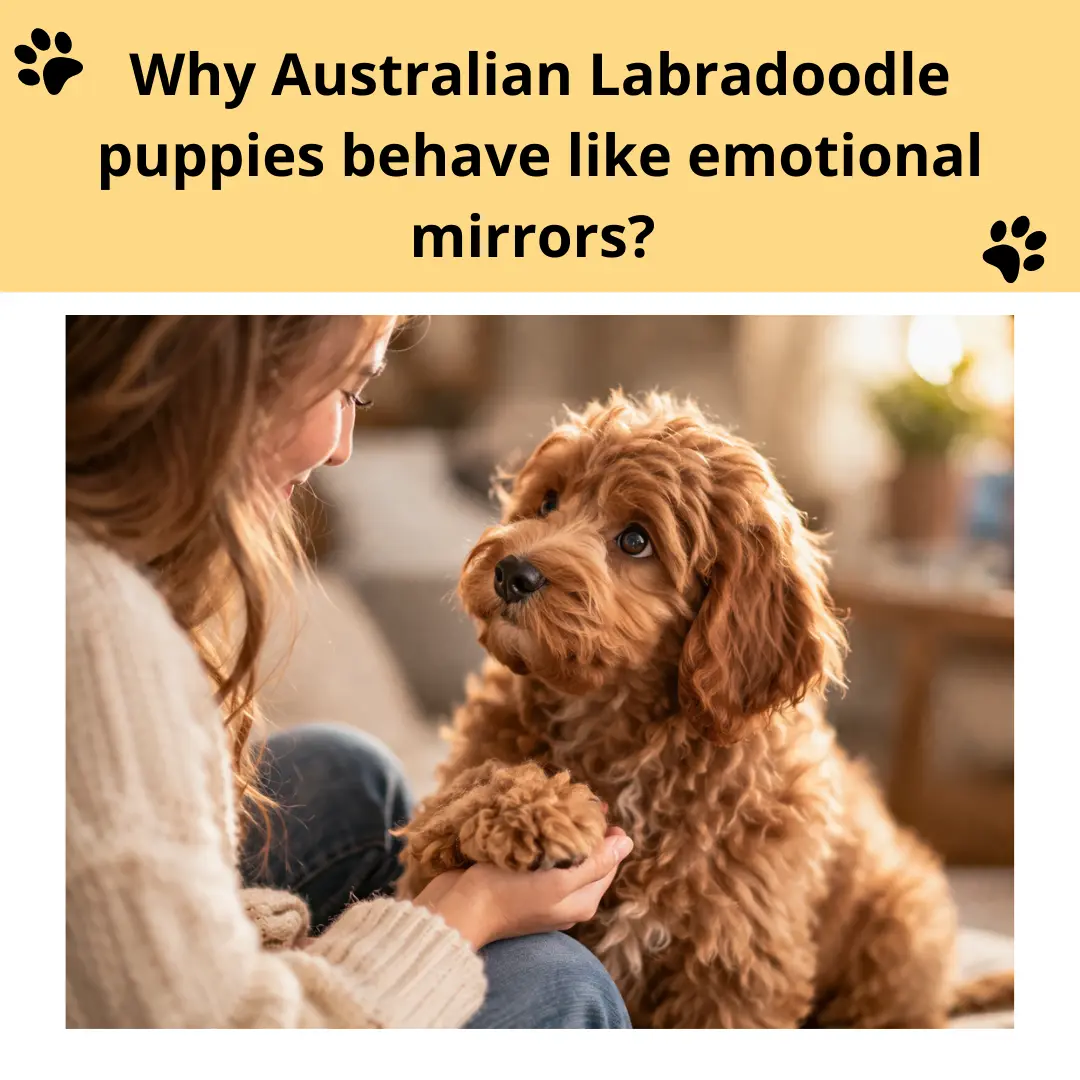
Australian Labradoodle puppies are known for their intelligence, affectionate nature, and strong emotional awareness. Many owners quickly notice something unusual — these puppies seem to reflect human emotions almost instantly. That’s why they are often described as “emotional mirrors.”
Whether you are calm, stressed, or excited, your puppy tends to respond in a similar way. This ability is not accidental but the result of careful breeding and early developmental experiences. Understanding this trait can help build a stronger and healthier bond with your dog.
The Breeding Behind Their Temperament
To understand this emotional sensitivity, it’s important to look at the breed’s origins. Australian Labradoodles were developed by combining Labrador Retrievers, Poodles, and other companion breeds. The goal was not only to create a visually appealing dog, but also one with excellent temperament and emotional intelligence.
Because of this, these puppies often show:
- Strong attachment to their owners
- High sensitivity to tone of voice
- Quick reactions to emotional changes
These qualities make them ideal family pets and therapy dogs, but they also mean their environment plays a major role in shaping their personality.
How Emotional Mirroring Develops
The early weeks of life are critical in shaping behavior. During this time, puppies begin to observe and interpret human actions, forming connections between emotions and outcomes.
Owners often notice that:
- Calm environments produce relaxed puppies
- Stressful situations can lead to nervous behavior
- Positive interactions build confidence
This is where emotional mirroring becomes clear. Puppies learn by observing their owners and adjusting their responses accordingly. If you remain calm in new situations, your dog is far more likely to feel secure and act confidently.
The Science Behind It
This behavior is linked to a concept called social referencing. Dogs naturally look to humans to decide how to react in unfamiliar situations.
Research shows that puppies can:
- Recognize human facial expressions
- Distinguish between positive and negative tones
- Adjust their behavior based on human reactions
Because of this, their responses often seem highly intuitive. In reality, they are carefully interpreting emotional signals and reacting in a meaningful way.
Why They Are So Sensitive
Emotional sensitivity is one of the breed’s most defining traits. It makes them incredibly loving companions, but it also requires mindful handling.
This sensitivity comes from:
- Selective breeding for companionship
- High intelligence
- A strong desire to connect with humans
As a result, consistency, patience, and emotional awareness are essential when raising them.
Common Mistakes to Avoid
Because of their sensitivity, certain mistakes can have a strong impact.
Some common ones include:
- Inconsistent training or mixed signals
- Accidentally reinforcing anxious behavior
- Lack of proper socialization
For example, if you react with anxiety in new situations, your puppy may interpret this as danger. Over time, this can lead to fear-based behavior.
Tips for Raising a Balanced Dog
To help your puppy grow into a confident adult:
- Stay calm and consistent
- Use positive reinforcement rather than punishment
- Maintain a stable daily routine
- Introduce new experiences gradually
These habits create a sense of security and help develop emotional stability.
The Long-Term Impact
Early experiences have a lasting effect. Puppies raised in calm, supportive environments are more likely to become adaptable and well-balanced dogs.
Negative experiences, on the other hand, may lead to:
- Anxiety
- Over-dependence
- Difficulty adjusting to change
That’s why the first months are especially important.
Final Thoughts
Australian Labradoodle puppies behave like emotional mirrors because of their genetics, intelligence, and deep connection with humans. This unique trait is what makes them so special.
For owners, it’s both a benefit and a responsibility. By creating a calm, structured, and positive environment, you help your puppy grow into a confident, balanced, and emotionally aware companion.