

Australian Labradoodle vs American Labradoodle: Key Differences Explained

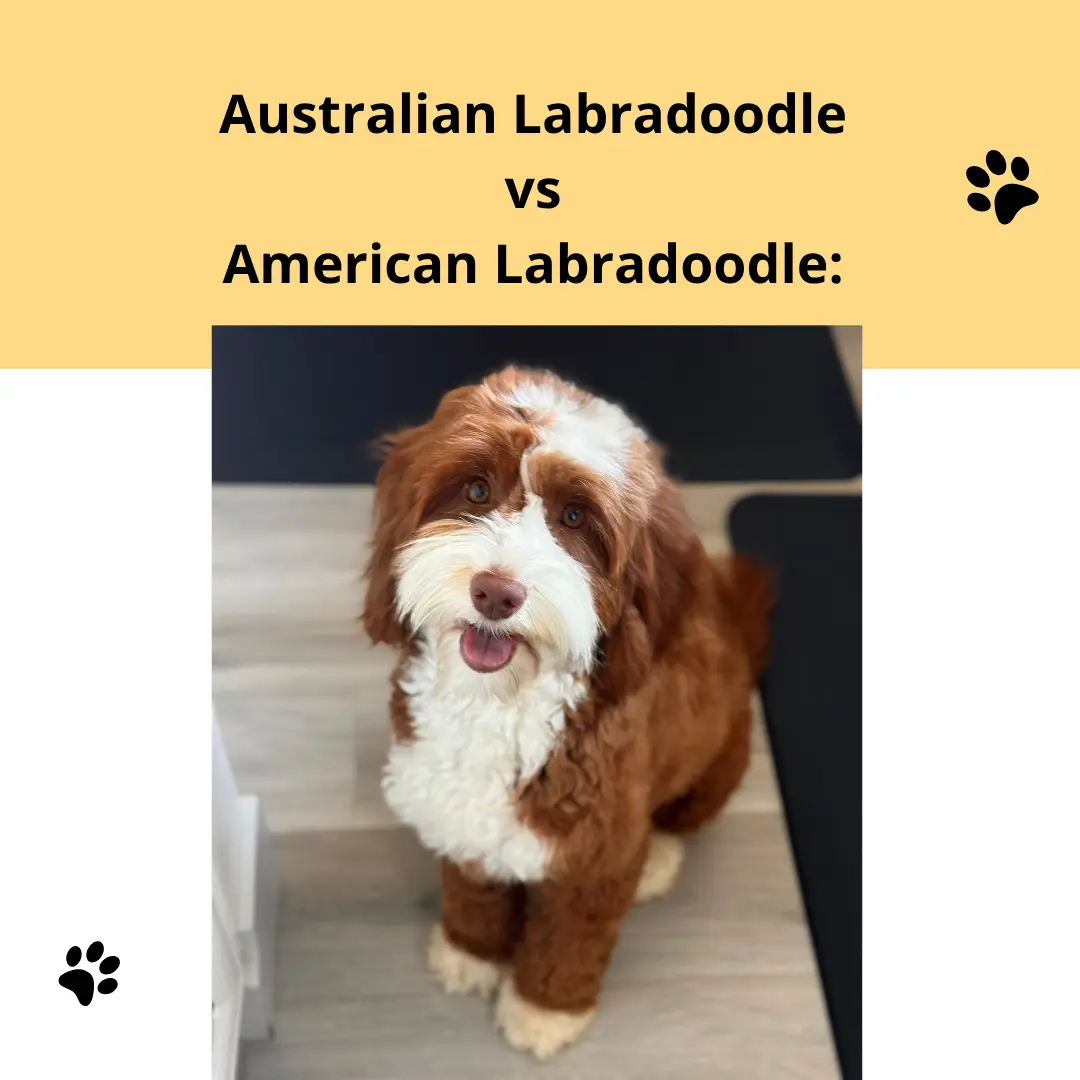
The comparison between Australian Labradoodle vs American Labradoodle is one of the most common topics among future dog owners. Both belong to the popular Labradoodle family, originally created by crossing a Labrador Retriever with a Poodle. However, over time, these two lines developed in different directions, resulting in noticeable differences in appearance, temperament, and predictability.
Understanding the real distinction between Australian and American Labradoodles helps potential owners choose a dog that fits their lifestyle rather than relying on marketing labels.
Origins: How the Two Types Developed
The original Labradoodle started as a simple cross between Labrador Retrievers and Poodles. This early version is often what people refer to when talking about the American Labradoodle today.
However, the term “American Labradoodle” is not an official breed classification. It is more of a general label used for Labradoodles that remain close to the original Labrador-Poodle mix, often including F1 or F1B generations.
The Australian Labradoodle, on the other hand, was developed in Australia as a more structured breeding program. Breeders aimed to create a consistent companion and assistance dog by introducing additional breeds such as Cocker Spaniel and English Cocker Spaniel. Over time, this created a more multi-generational and standardized type of Labradoodle.
What Makes an Australian Labradoodle Different?
An Australian Labradoodle is typically bred across multiple generations with carefully selected traits. Because of this, they tend to be more predictable in both appearance and temperament compared to early-generation doodles.
Common characteristics include:
- Soft fleece or wavy coats
- Generally low to moderate shedding (varies by line)
- Friendly, people-oriented temperament
- Strong suitability as therapy or family dogs
- More uniform “teddy bear” appearance
One of the main goals of this breeding program was consistency. As a result, Australian Labradoodles often look and behave more similarly across different litters.
It is important to note, however, that no dog can be guaranteed completely allergy-free. Australian Labradoodles are often described as more allergy-friendly, but individual reactions can still vary.
What Is an American Labradoodle?
The American Labradoodle is generally closer to the original Labrador Retriever and Poodle mix. Most American Labradoodles are first-generation (F1) or backcross (F1B), meaning their genetics are less stabilized compared to Australian lines.
Because of this, they can vary significantly in:
- Coat type (straight, wavy, or curly)
- Shedding level
- Size and structure
- Personality traits
Some may lean more toward the calm, friendly Labrador temperament, while others show higher energy and strong Poodle-like intelligence and drive.
Unlike Australian Labradoodles, American Labradoodles are not bred under a single standardized system, which means each dog can be quite unique.
Coat, Grooming, and Shedding
One of the most important differences in the Australian Labradoodle vs American Labradoodle comparison is coat predictability.
Australian Labradoodles usually have more consistent fleece coats that are easier to maintain and tend to shed less. This makes grooming more predictable, although regular brushing and professional trimming are still required.
American Labradoodles, however, can have a wider range of coat types. Some shed minimally, while others may shed more noticeably depending on genetics.
In both cases, proper grooming is essential:
- Brushing several times per week
- Regular coat trimming every 6–8 weeks
- Ear and hygiene maintenance
Rather than assuming one type is “better for allergies,” it is more accurate to say Australian Labradoodles tend to be more predictable in coat behavior.
Temperament and Behavior Differences
Both types are intelligent and social, but there are subtle behavioral trends.
Australian Labradoodles are often:
- Calm and emotionally balanced
- Very people-focused
- Easier for first-time owners
- Well-suited for therapy or assistance work
American Labradoodles may be:
- More energetic and playful
- Slightly more independent
- Stronger working or sporting drive in some lines
These are general tendencies rather than strict rules, since individual temperament can vary widely.
Training and Exercise Needs
Both types respond well to training thanks to the intelligence inherited from the Poodle lineage. Positive reinforcement works especially well.
Australian Labradoodles often settle more easily into structured routines, while American Labradoodles may require slightly more physical and mental stimulation to stay balanced.
Daily exercise is important for both:
- Walks
- Play sessions
- Mental enrichment toys
- Basic obedience practice
Without enough stimulation, either type can become bored or develop unwanted behaviors.
Which One Should You Choose?
There is no absolute winner in the Australian Labradoodle vs American Labradoodle comparison. The best choice depends on your expectations and lifestyle.
Choose an Australian Labradoodle if you prefer:
- More predictable temperament
- More consistent coat type
- A calmer companion dog
- A family-friendly, therapy-style personality
Choose an American Labradoodle if you prefer:
- A more varied and unique dog
- Higher energy and playfulness
- A closer-to-original Labradoodle mix
- Less standardized appearance
Both can become excellent family pets when properly raised, trained, and socialized.
Final Thoughts
The difference between Australian Labradoodles and American Labradoodles is less about “better or worse” and more about predictability versus variation. Australian lines prioritize consistency and temperament stability, while American lines preserve more genetic diversity from the original cross.
For most families, the right choice comes down to lifestyle: calm predictability or energetic variety. Either way, both types of Labradoodles are intelligent, affectionate companions that thrive in loving homes.