

Why My Labradoodle Is So Destructive When Left Alone

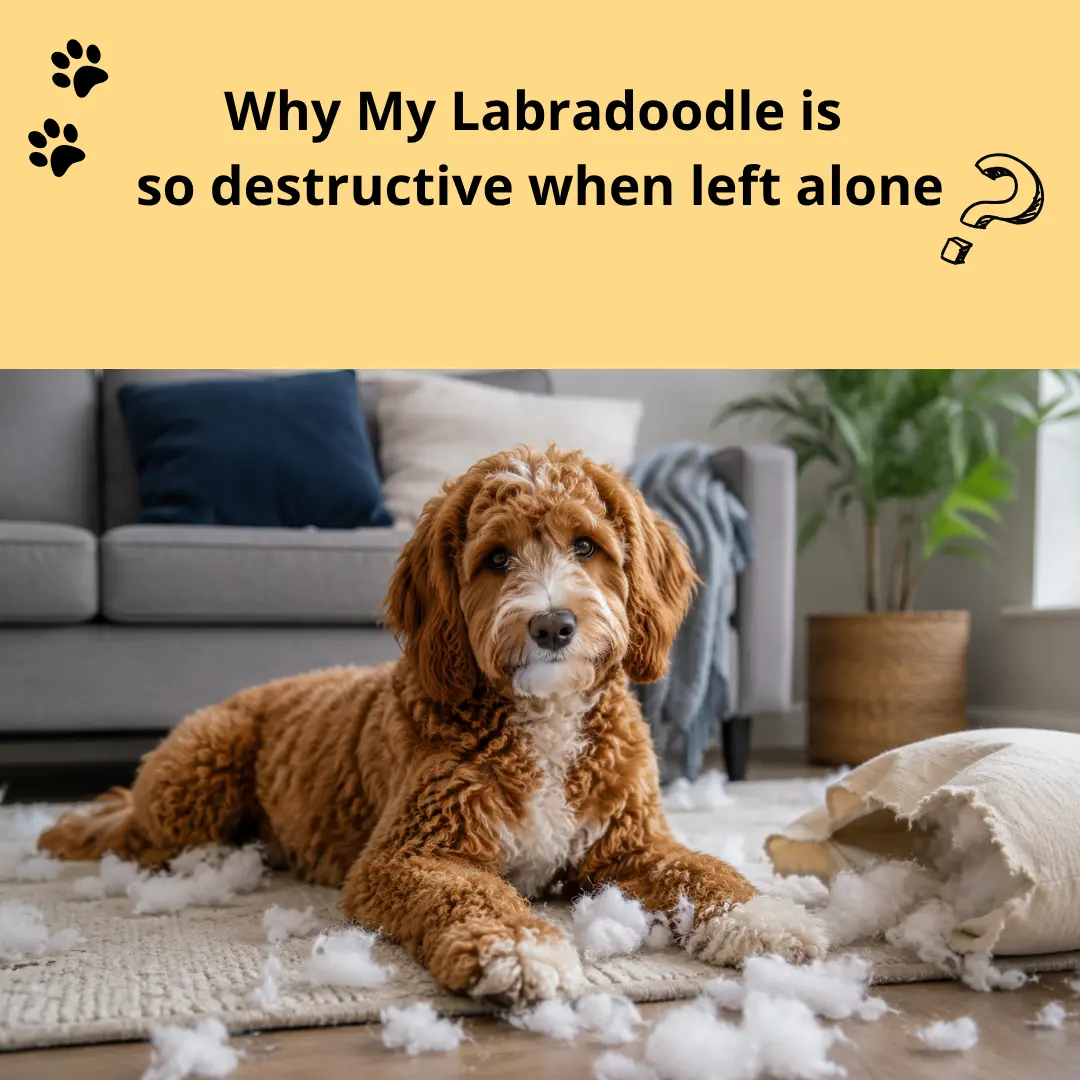
Labradoodles are loving, intelligent, and energetic dogs, but many owners struggle with one frustrating problem: destructive behavior when the dog is left alone. If you have ever come home to chewed furniture, torn pillows, scratched doors, or scattered trash, you may be wondering, “Why is my Labradoodle so destructive when left alone?” Understanding the reasons behind this behavior is the first step toward fixing it. In most cases, destructive habits are linked to boredom, separation anxiety, lack of exercise, or insufficient mental stimulation.
Because Labradoodles are highly social and active dogs, they require consistent training, daily activity, and emotional engagement. Without proper care and structure, a Labradoodle left alone for long periods may develop destructive tendencies. Fortunately, with the right Labradoodle training tips and home routine, you can reduce unwanted behavior and help your dog feel calmer and more secure.
Understanding Destructive Behavior in Labradoodles
Destructive behavior in dogs is not usually caused by spite or revenge. Your Labradoodle is not trying to punish you for leaving the house. Instead, chewing, digging, barking, or scratching are often signs that your dog is stressed, anxious, or under-stimulated.
Labradoodles inherit intelligence from both the Labrador Retriever and the Poodle. This combination creates a breed that thrives on interaction, problem-solving, and activity. A bored Labradoodle quickly finds ways to entertain itself, and unfortunately, that may include destroying household items.
Common destructive behaviors include:
- Chewing shoes, furniture, or cords
- Scratching walls or doors
- Digging into carpets or couches
- Excessive barking or whining
- Tearing apart pillows or blankets
- Getting into trash cans
If your Labradoodle becomes destructive only when left alone, separation-related stress may be a major factor.
Separation Anxiety in Labradoodles
One of the most common reasons a Labradoodle is destructive when left alone is separation anxiety. Labradoodles form strong emotional bonds with their owners and often dislike being separated from the family.
Signs of separation anxiety may include:
- Pacing before you leave
- Barking excessively after departure
- Drooling or panting heavily
- Attempting to escape confined spaces
- Following you constantly around the house
- Destructive chewing focused near doors or windows
A Labradoodle with separation anxiety may panic when left alone, leading to destructive actions as a coping mechanism. Puppies and younger dogs are especially prone to this issue because they have not yet learned independence.
Lack of Physical Exercise
Another major reason for Labradoodle destructive behavior is insufficient exercise. Labradoodles are energetic dogs that need daily physical activity to stay healthy and balanced. A quick walk around the block is often not enough.
Without enough exercise, excess energy builds up and turns into unwanted behavior indoors. A tired dog is usually a well-behaved dog, while an under-exercised Labradoodle may chew furniture or destroy objects simply to release energy.
Experts often recommend:
- At least 60–90 minutes of exercise daily
- Long walks or jogging sessions
- Fetch games in the yard
- Swimming activities
- Interactive outdoor play
Mental exhaustion is just as important as physical exercise. Combining both helps reduce destructive tendencies significantly.
Mental Stimulation Is Essential
Labradoodles are extremely intelligent. If their minds are not occupied, they may invent their own “games,” which often involve destroying something in your home.
Mental stimulation for Labradoodles can include:
- Puzzle toys
- Treat-dispensing games
- Obedience training sessions
- Scent work activities
- Interactive feeders
- Learning new commands
Rotating toys regularly can also help prevent boredom. Dogs lose interest in the same toys over time, so introducing variety keeps them engaged.
Many Labradoodle owners notice improvements once they provide structured enrichment activities before leaving the house.
Crate Training Can Help
Crate training is often misunderstood, but when used correctly, it can provide comfort and security for a Labradoodle. Dogs naturally seek den-like environments where they feel protected.
A properly introduced crate should never feel like punishment. Instead, it becomes a safe resting space. Crate training may help prevent destructive behavior while also reducing anxiety.
To make crate training successful:
- Introduce the crate gradually
- Use positive reinforcement
- Add comfortable bedding and toys
- Never force the dog inside
- Keep sessions short at first
However, Labradoodles should not remain crated for excessively long periods. Puppies especially need frequent breaks, exercise, and social interaction.
Creating a Calm Departure Routine
Dogs easily recognize departure cues such as grabbing keys, putting on shoes, or picking up a bag. Some Labradoodles begin feeling anxious before the owner even leaves.
Creating a calmer routine can reduce stress levels. Try these Labradoodle separation anxiety tips:
- Avoid dramatic goodbyes
- Leave quietly and confidently
- Practice short departures first
- Ignore attention-seeking behavior before leaving
- Leave calming background sounds like music or TV
Some owners also find success with dog cameras or treat-dispensing devices that allow interaction during the day.
The Importance of Consistent Training
Consistency is essential when correcting destructive dog behavior. If rules constantly change, your Labradoodle may become confused.
Positive reinforcement training works best for Labradoodles because they respond strongly to praise and rewards. Punishing destructive behavior after returning home is ineffective because dogs do not connect delayed punishment with past actions.
Instead:
- Reward calm behavior
- Reinforce independence
- Redirect chewing toward appropriate toys
- Praise your dog for staying relaxed alone
Teaching commands like “place,” “stay,” and “settle” can also improve emotional control.
When to Seek Professional Help
Sometimes destructive behavior becomes severe despite your best efforts. If your Labradoodle shows intense separation anxiety, self-harm, or nonstop panic behaviors, professional support may be necessary.
A certified dog trainer or veterinary behaviorist can evaluate your dog’s emotional state and create a customized treatment plan. In some cases, anxiety management strategies or medical support may be recommended.
Seeking help early often prevents the behavior from worsening over time.
Final Thoughts
If your Labradoodle is destructive when left alone, the behavior usually has an understandable cause rather than bad intentions. Separation anxiety, boredom, lack of exercise, and insufficient mental stimulation are among the most common triggers. Because Labradoodles are intelligent and social dogs, they need both physical activity and emotional engagement to remain balanced.
With proper Labradoodle training, daily exercise, enrichment activities, and a calm routine, most destructive habits can improve significantly. Patience and consistency are key. Over time, your Labradoodle can learn to feel safer and more comfortable when home alone, leading to a happier environment for both you and your dog.