

How to Prevent Matting in a Labradoodle’s Coat

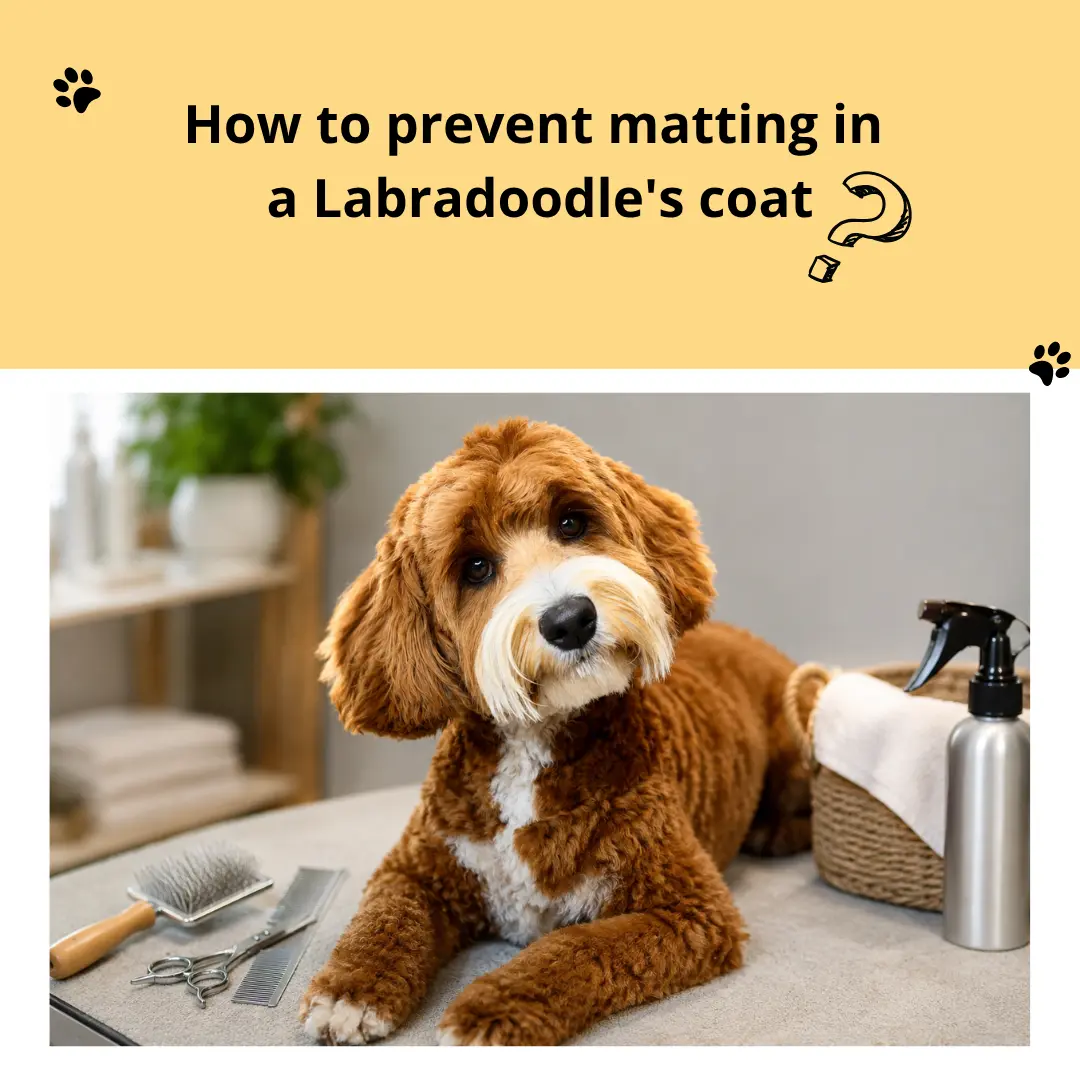
A soft, fluffy coat is one of the most beloved characteristics of a Labradoodle. However, without proper Labradoodle coat care, that beautiful coat can quickly become tangled and matted. Learning how to prevent matting in a Labradoodle’s coat is essential for maintaining your dog’s comfort, appearance, and overall health.
Matting is more than a cosmetic issue. Severe mats can pull on the skin, trap moisture, restrict airflow, and even cause irritation or infections. Fortunately, with a consistent grooming routine and the right techniques, matting prevention for Labradoodles can become a simple part of everyday care.
Why Labradoodle Coats Mat Easily
Labradoodles can have curly, wavy, or fleece coats, all of which require regular maintenance. Unlike some breeds that shed heavily, many Labradoodles retain loose hair within the coat. As this loose hair mixes with dirt, moisture, and natural oils, tangles begin to form.
Areas that experience friction are particularly vulnerable. Behind the ears, under the collar, around the legs, and near the tail are common places where mats develop first. Understanding these risk factors is the first step in effective Labradoodle coat maintenance.
Brush Your Labradoodle Regularly
The most important rule for preventing mats is consistent brushing. Most Labradoodles should be brushed at least three to four times per week. Dogs with tighter curls often benefit from daily brushing.
When brushing, avoid focusing only on the outer layer of the coat. Hidden tangles often form close to the skin, where they can go unnoticed until they become difficult to remove. Professional groomers frequently recommend line brushing, a technique that involves working through the coat in small sections from the skin outward.
Regular brushing helps remove loose hair, distribute natural oils, and prevent tangles before they become serious mats. It is one of the most effective Labradoodle grooming tips any owner can follow.
Use the Right Grooming Tools
Successful Labradoodle coat care starts with quality grooming tools. The right equipment makes brushing more effective and more comfortable for your dog.
Essential tools include:
- A slicker brush for removing loose hair and small tangles
- A stainless steel comb for checking deeper layers of the coat
- A detangling spray for stubborn knots
- Grooming scissors for minor touch-ups around sensitive areas
After brushing, always run a metal comb through the coat. If the comb moves easily from the skin to the tips of the hair, you can be confident that hidden mats are not forming.
Pay Extra Attention to Problem Areas
Some parts of a Labradoodle’s body require more attention than others. These high-friction areas can develop mats surprisingly quickly.
Be sure to check:
- Behind the ears
- Under collars and harnesses
- Armpits
- The chest area
- The belly
- Between the toes
- Around the tail
A quick daily inspection of these locations can save hours of grooming later. Early detection is one of the easiest ways to prevent matting in a Labradoodle’s coat.
Keep the Coat Clean and Completely Dry
Moisture is one of the leading causes of matting. After swimming, bathing, or walking in the rain, always dry your Labradoodle thoroughly.
Wet hair tends to twist and clump together, creating ideal conditions for tangles. Even a well-brushed coat can begin to mat if it remains damp for extended periods.
Use a towel to remove excess moisture and consider using a dog-safe blow dryer on a low setting. While bathing is important, avoid overbathing, as excessive washing can dry out the skin and negatively affect coat quality.
Most Labradoodles only require a bath every four to six weeks unless they become particularly dirty.
Maintain a Professional Grooming Schedule
Even dedicated owners benefit from professional grooming services. Most Labradoodles should visit a groomer every six to eight weeks.
Regular trims help keep the coat manageable and reduce the likelihood of tangles forming between appointments. Professional groomers can also identify developing mats before they become severe and offer personalized Labradoodle grooming tips based on your dog’s coat type.
Many owners find that maintaining a moderate coat length makes daily grooming significantly easier.
Support Coat Health Through Proper Nutrition
Healthy skin and coat start from within. A balanced diet rich in high-quality protein, omega-3 fatty acids, vitamins, and minerals supports strong, healthy hair growth.
Poor nutrition can contribute to dry, brittle fur that tangles more easily. Providing proper hydration is equally important, as dehydration can negatively affect skin and coat condition.
Good nutrition may not replace grooming, but it plays an important role in long-term Labradoodle coat maintenance.
Start Grooming Habits Early
If you have a Labradoodle puppy, begin grooming routines as early as possible. Short, positive grooming sessions help puppies become comfortable with brushing, combing, and handling.
Reward calm behavior with treats and praise. Dogs that learn to enjoy grooming when they are young are often much easier to maintain as adults.
Establishing positive habits early can make matting prevention for Labradoodles much easier throughout their lives.
Common Grooming Mistakes Labradoodle Owners Make
Even caring owners sometimes make mistakes that increase the risk of matting.
Common errors include:
- Brushing only the surface of the coat
- Waiting until tangles become visible
- Skipping grooming during winter months
- Allowing the coat to air dry after swimming
- Keeping collars on continuously without checking underneath
- Delaying professional grooming appointments
Avoiding these mistakes can dramatically improve the effectiveness of your Labradoodle coat care routine.
Frequently Asked Questions
How often should I brush my Labradoodle?
Most Labradoodles benefit from brushing three to four times per week. Dogs with curly coats may require daily brushing to prevent tangles.
Can mats hurt a Labradoodle?
Yes. Mats can pull on the skin, restrict airflow, trap moisture, and create discomfort. Severe matting may even lead to skin infections if left untreated.
Is it better to shave a heavily matted coat?
In cases of severe matting, professional groomers often recommend shaving the coat rather than attempting to brush out large mats. This approach is usually safer and more comfortable for the dog.
What coat type mats the most?
Curly and dense fleece coats generally require the most maintenance and are often more prone to matting than looser coat types.
Final Thoughts
Knowing how to prevent matting in a Labradoodle’s coat is one of the most important responsibilities of ownership. Consistent brushing, professional grooming, proper nutrition, and attention to high-risk areas all contribute to a healthy, tangle-free coat.
With a proactive approach to Labradoodle coat care, you can keep your dog comfortable, healthy, and looking their best throughout every stage of life. A few minutes of regular maintenance each week can prevent painful mats and help your Labradoodle enjoy a happier, healthier coat for years to come